


.jpg)

Blog//
Why In-House Teams Struggle to Bridge the AI ROI Gap
September 16, 2026
August 3, 2026

Global AI spending is expected to hit $2.59 trillion in 2026 — a 47% jump over 2025, and what Gartner calls the inflection year for enterprise adoption. But spending and returns aren't moving together. Only 28% of AI use cases in IT infrastructure and operations fully meet ROI expectations, and Gartner's own analysts say CIOs are finding it difficult to prove the value of AI programs and show measurable business results.
Part of the gap is businesses expecting too much too fast. But even companies with realistic expectations run into a harder problem: Most AI projects fail before they reach production because the data underneath them was never made AI-ready. Response times, cost models, agentic orchestration — all of it depends on the data feeding the system. Bad data produces bad decisions which waste time and resources, making further AI investments harder to justify.
What AI-ready data actually requires
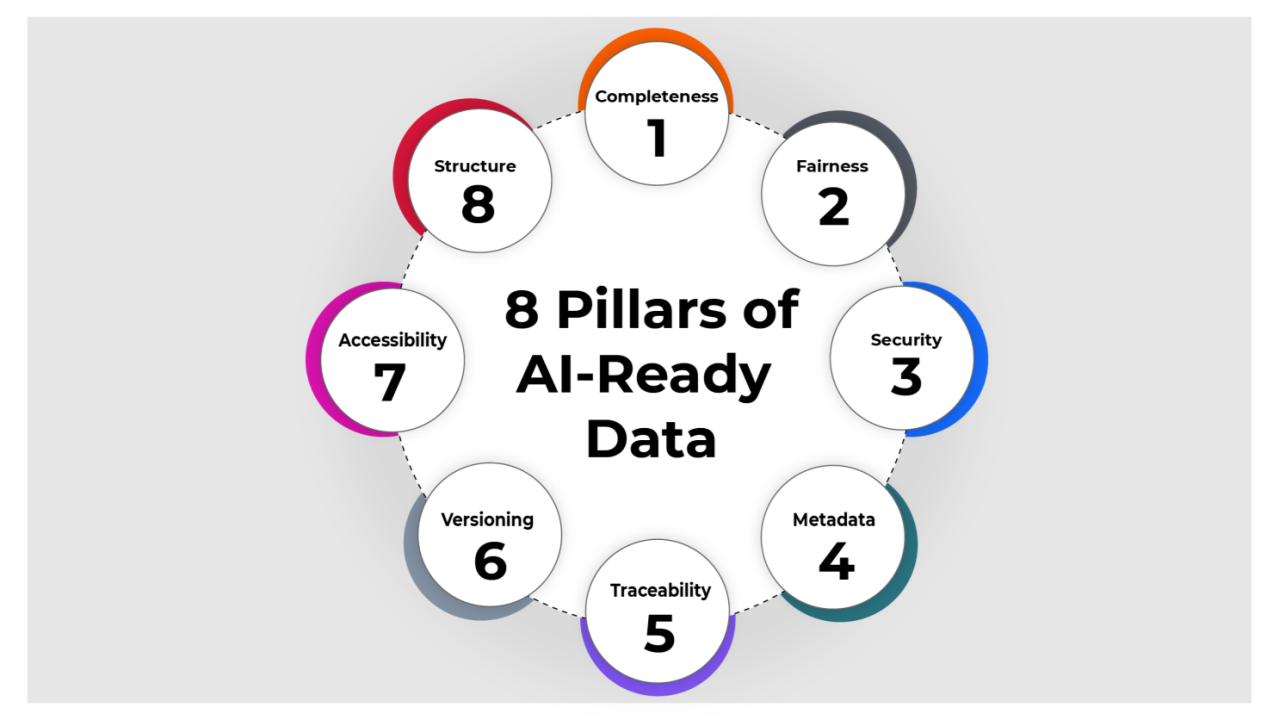
Data readiness isn't one checkbox, it's eight. And they all have to hold up at the same time:
- Structure — A consistent, machine-readable format, so systems can integrate and analyze data without manual translation
- Accessibility — A unified view across IT operations instead of data locked in silos
- Versioning — Snapshotted datasets so teams can trace exactly when and why a model's performance shifted
- Traceability — An unbroken line from a single request through every system it touched
- Metadata — Context on where data came from, how it's collected, and where its known gaps are
- Security — PII masking and detection built in by default
- Fairness — Bias detection that catches skewed distributions before they reach a training pipeline
- Completeness — Validated, enriched records that analytics and anomaly detection can actually rely on
These pillars reinforce each other, so skipping one undercuts the rest. Structure without traceability means a model breaks and nobody can find out why. Accessibility without security means the moment silos come down, sensitive records are exposed. Treat any of these as optional and you've rebuilt the same fragmentation you were trying to fix.
Governance has to run continuously
Teams also have to uphold these standards (yes, all eight) with every request, every time. That's what active metadata governance does: When an AI agent asks for data, a metadata layer determines the right dataset, applies access and compliance rules, and confirms the data is current, all before a single record gets processed.
But this only works if the process is automated. Pipelines need to emit metadata on every job run, written to a shared store treated as the single source of truth. Without that, metadata practices stay static. This causes naming conventions and definitions to gradually drift out of sync across systems, making the gap harder to close the longer it runs.
The pillars set the standard. Active metadata enforces it. This last stage is where the investment actually pays off — or doesn't. Trustworthy, governed data moves through four stages before it becomes action: isolated raw fields become organized information, information becomes knowledge once patterns are consistent across systems, and knowledge becomes insight when it's specific enough to trigger a real workflow — flagging a hardware refresh, opening an ITSM ticket, adjusting a price.

To make AI work, in-house IT needs help
Next to data readiness, staffing is the other major hurdle for enterprise AI programs.
In-house IT teams are generalists by design, and they’re often stretched across many different activities. The same people expected to manage help desk tickets, network uptime, and security incidents are also expected to maintain data quality and governance. It’s a tall order, and even if teams manage to pull it off, they can’t be expected to keep it up for long.
Companies have started hiring more specialists, but the pressure to show AI progress is pushing companies to put the cart before the horse. They’ve been hiring AI engineers and data scientists before the data platform engineers, database engineers, and data quality analysts who would build and maintain the AI foundations. (To add insult to injury, AI specialists earn $15,000 more on average than data infrastructure roles, meaning companies are paying a premium for people who can't deliver without foundations that have yet to be built.)
Organizations also don’t know how to hire or screen for these skills. One engineering assessment firm found a 75% fail rate on basic AI skills evaluations, not because candidates are unqualified but because companies are testing for the wrong things: “The entire industry is based on assessment frameworks that can’t distinguish between the types of AI work that need to be done.”
Stack that staffing gap on top of the technical one, and it's clear why returns on AI investments remain elusive.
How AI-first MSPs close the gap
AI-first MSPs solve the staffing problem and the data problem together, because they've already built what in-house teams are trying to hire for and they run it across many clients on shared infrastructure. The data foundation, the active metadata layer, and the orchestration on top of it don't get built from scratch for each new client. They get extended.
Astreya pairs a global team of data engineers, platform architects, and governance specialists with Pyxis, an IT intelligence platform that correlates data across ITSM, ITAM, contact center systems, and event logs. Neither the team nor the platform starts from zero. The specialists have run these frameworks across dozens of enterprise environments, and Pyxis carries the pattern recognition they've built up. So, when a new client comes on, the hypotheses it surfaces on day one reflect what actually drives IT problems at scale, across environments ranging from global footprints with 225,000+ records to financial research firms spanning multiple regions. Continuous governance ships as part of the managed service. No hiring sprint required.
Get help to get ahead
The AI ROI gap is a specialization problem wearing a technology costume. Closing it takes dedicated people running dedicated infrastructure, continuously — and AI-first MSPs have already built that infrastructure across dozens of client environments, ready to extend to yours.
To learn how Astreya can help you close your AI ROI gap, contact us.