

.jpg)

Blog//
Why AV & Automation Are Redefining Workplace Collaboration
February 1, 2026
October 15, 2025
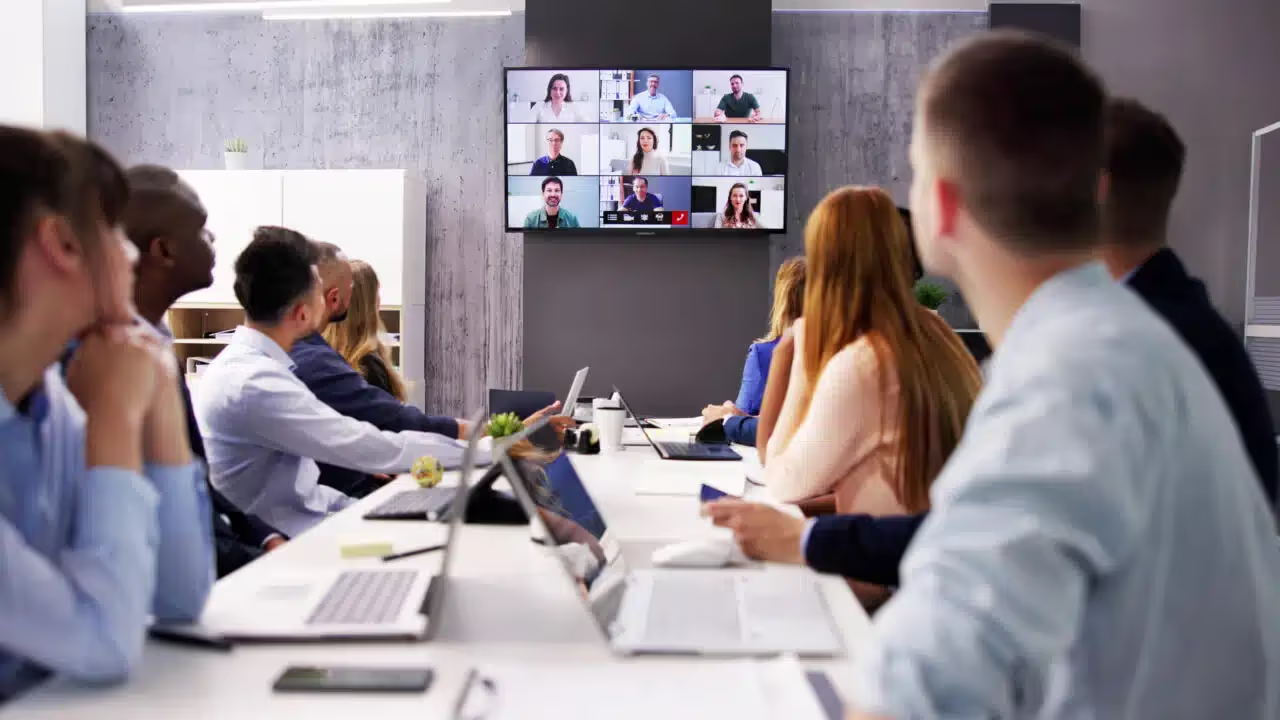
In Astreya's Talks Webinar, “AV 3.0: A New Age of Workplace Collaboration”, we shed light on how organizations across the globe are transforming their audiovisual (AV) environments with AI, analytics, and intelligent automation.
Here are some of the key insights and strategies shared during the conversation between Jonathan Mangnall, Managing Director, Utelogy (EMEA); Philipp Gude, Chief Sales Officer, Gude; Matt Cregan, Senior Director of AV, Astreya; and Bharath Keshavamurthy, VP of Digital Workplace Services, Astreya.
The great shift: From reactive to proactive
For years, AV systems were synonymous with frustration: frozen screens, silent microphones, and delayed meetings. The old model waited for something to fail before anyone acted. Today, that mindset is obsolete.
Proactivity is the new benchmark for success. As Matt Cregan, Director of AV Services at Astreya, put it, “Proactive support identifies and resolves issues before the user even enters the room.” Supported by 24/7 remote monitoring, predictive analytics, and automated fault correction, proactive management ensures flawless uptime and a seamless user experience.
Jonathan Mangnall, Managing Director of Utelogy, highlighted a critical shift: “Most global AV estates remain unmanaged — making consistent quality nearly impossible.” Modern AV service management, he emphasized, must integrate tightly with IT ecosystems to enable data-driven visibility across every connected device.
Why “reactive” AV costs more than it seems
As Bharath Keshavamurthy, VP of Digital Workplace Services at Astreya, explained, the implications of reactive operation extend far beyond technical downtime:
- Productivity loss: Even a 10-minute delay multiplies the time lost across teams and geographies.
- Emergency costs: Every unplanned fix comes at a premium.
- Unpredictable budgets: Without proactive systems, financial planning becomes volatile.
AV failures don’t just waste minutes; they cascade into lost focus, broken momentum, and high operational costs. Moving to a proactive strategy is as much about financial efficiency as it is about user satisfaction.
Data as the new oil
One phrase echoed among all in this webinar: data is the oil of the 21st century. Data now fuels the continuous optimization of workplace collaboration.
Through remote monitoring and AI-driven analytics, companies can not only detect failures but also predict and prevent them from occurring. Philipp Gude, Chief Sales Officer at Good Systems, explained how power data tracking enables sustainability and cost control: “You have to measure it to manage it. Whether you’re preventing failures or reducing carbon footprint, data gives you control.”
A major global retailer cut mean time to resolution (MTTR) by 75% and service costs by 65%.
The London Business School saved £51,000 ($62,800) annually in power costs, resulting in a 48-ton reduction in CO₂ emissions through proactive energy management.
Designing for AV success: Standards, structure & scalability
Designing modern AV systems is no longer just about performance specs. It’s about serviceability and resilience. Mangnall warned that many organizations still “value-engineer” AV systems to meet upfront capital budgets, ignoring the ongoing cost of maintenance and management.
The new approach?
- Select hardware with rich APIs for remote monitoring.
- Build a network architecture designed for manageability and visibility.
- Prioritize interoperability to ensure devices from multiple vendors coexist seamlessly.
Cregan reinforced that “AV success in 2025 and beyond is defined by system resilience: the ability to identify, fix, and self-heal without impacting users.”
Real-world AV automation wins: Data, cost & consistency
The panel shared several compelling examples of what proactive AV management delivers in practice.
- Global Retailer Case Study: Visibility across thousands of rooms enabled a 75% reduction in issue resolution times and a 65% decrease in costs. Automated self-healing adjusted screen input errors before users noticed them, preventing costly service tickets altogether.
- London Business School: Proactive power management reduced energy usage by 151,000 kWh per year, translating to £51,000 in annual savings and substantial sustainability gains.
- Global AV Standardization Project: Astreya’s comprehensive redesign of a client’s AV infrastructure unified user interfaces across every location, from Singapore to New York. The result was consistent user experiences, cleaner support processes, and boosted satisfaction scores.
There’s a common theme that emerges across all these cases, and that is, when AV works reliably, productivity soars.
The power of AV collaboration: Astreya + Utelogy + Gude Systems
At the heart of transformation lies partnership. Astreya provides global managed services and human oversight, Utelogy powers intelligent software for monitoring and analytics, and Gude Systems delivers smart power and remediation hardware. Together, they form a triad of automation, intelligence, and reliability.
As Keshavamurthy summarized: “The combination of 24×7 expert management, intelligent data analytics, and hardware-level automation ensures a seamless experience and decisive recovery against downtime.”
AI: From AV insight to autonomy
Artificial Intelligence isn’t just accelerating AV, it’s redefining it.
Mangnall noted that AI is moving from hype to practical service management. Systems now use agentic AI to automate workflows, schedule upgrades, self-diagnose faults, and even auto-heal systems in seconds. Where routine tasks once consumed human effort, AI now orchestrates them instantly.
Here are some key ways in which AI is reshaping AV ecosystems:
- Predictive Analytics: anticipating component failures before they occur.
- Smart Scheduling: coordinating updates during downtime without human input.
- Enhanced UX: AI-driven features like auto-captioning, gesture recognition, and hands-free operation.
- Sustainability Metrics: real-time power optimization to reduce consumption.
As Cregan observed, “AI is embedded in everything we do — from the devices themselves to the ecosystem that manages them.”
The BYOD challenge & network visibility
In an era where Bring Your Own Device (BYOD) setups are prevalent in hybrid offices, maintaining data visibility is a complex task.
The panel acknowledged the challenge of integrating non-native devices within unified monitoring platforms. Utelogy, for instance, collaborates closely with Microsoft to align with changes in data access (like the deprecation of Graph API in 2025), ensuring enterprises retain holistic insight over their AV and collaboration ecosystems.
Reshaping the hybrid experience
Hybrid work has redefined expectations for collaboration technology. Employees now demand intuitive, everywhere-ready experiences, regardless of time, place, or platform.
For Keshavamurthy, success comes down to “universal consistency and simplicity.” An employee in Singapore should experience the same one-touch start as a counterpart in New York. This consistency not only reduces friction but also drives adoption across the organization.
Sustainability & operational efficiency
Beyond user convenience, sustainability emerged as a recurring theme. Remote management not only saves travel emissions but also optimizes energy efficiency across facilities.
With proactive power management and smart PDUs (Power Distribution Units), organizations can remotely cycle, reset, and calibrate equipment, thereby reducing both downtime and carbon emissions. As Gude highlighted, “Proactive monitoring prevents issues, reduces downtime, and lowers service costs — all while meeting sustainability goals.”
Lessons from the field: How to prepare for AV automation (AV 3.0)
The panel’s advice for organizations planning their journey toward AV automation in 2026 and beyond centers on three pillars:
- Invest in Visibility
Build systems with robust monitoring tools from the ground up. Visibility drives accountability and fast response. - Standardize Design and Experience
Create global design templates and user interfaces that scale seamlessly across locations. - Leverage AI with Purpose
Focus on AI applications that deliver measurable returns, such as predictive maintenance, smart scheduling, and workflow automation.
The road ahead: AV as a strategic asset
Once considered a support function, AV now stands at the core of digital workplace strategy. With AI-enriched control systems, interoperable infrastructure, and actionable data, organizations can turn AV investments into strategic enablers of collaboration, sustainability, and innovation.
Magnall encapsulated the vision perfectly: “This isn’t about being fancy — it’s about being practical. Automate what’s repetitive. Use AI where it matters. And give people back their time.“
The 2026 AV landscape is being defined not by devices but by data-driven intelligence. Through the union of proactive management, AI orchestration, and global partnership, organizations are ushering in a future where downtime disappears, user experience thrives, and every meeting simply works.
Explore how Astreya helps global enterprises design smarter, more reliable AV environments.
Learn more about our Workplace Collaboration Services →