

.jpg)
Blog//
How to Create a Self-Healing AV Environment in 2026
February 2, 2026
February 3, 2026
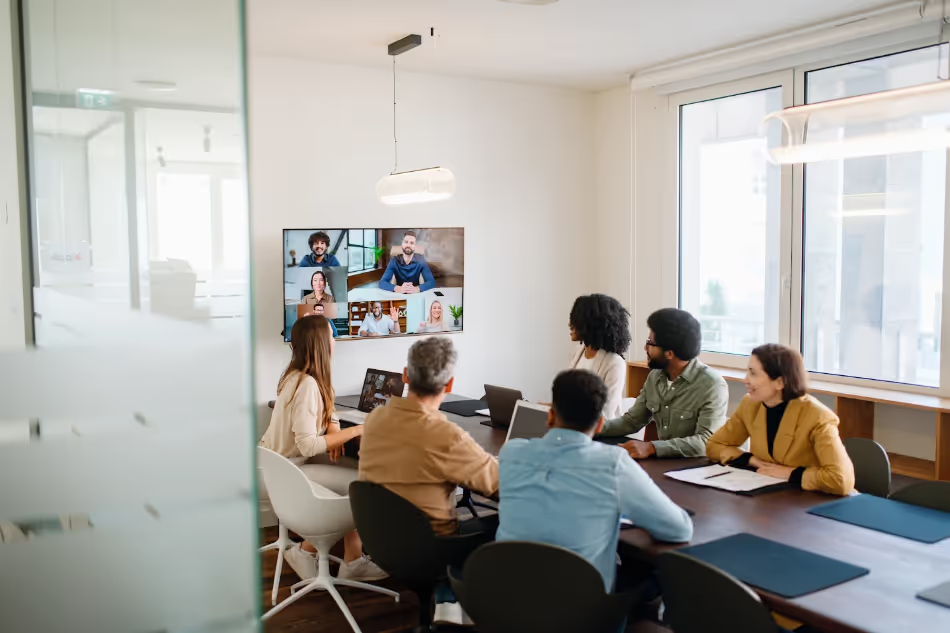
When an AV system fails—even briefly—your business feels it. A single device malfunction can disrupt work for everyone in the room and create issues across the AV environment. To keep things running smoothly, teams need a proactive approach that addresses issues before they arise. That means shifting from managing individual devices to managing service quality across the entire AV estate.
The foundation of this shift is the convergence of telemetry and action: real-time insight from Remote Management and Monitoring (RMM) platforms paired with the physical control of intelligent PDUs (power distribution units). Together, these systems create a self-healing AV environment where faults are automatically detected, diagnosed, and resolved remotely, often within seconds.
This piece explains how RMM and PDUs work together, what AV automation looks like in practice, and how this model reduces MTTR, enables remote AV resolution, and dramatically improves uptime across enterprise collaboration spaces.
What is self-healing in AV?
A self-healing AV system is one that can automatically detect a fault condition and execute a remediation step (typically a power cycle) without human intervention.
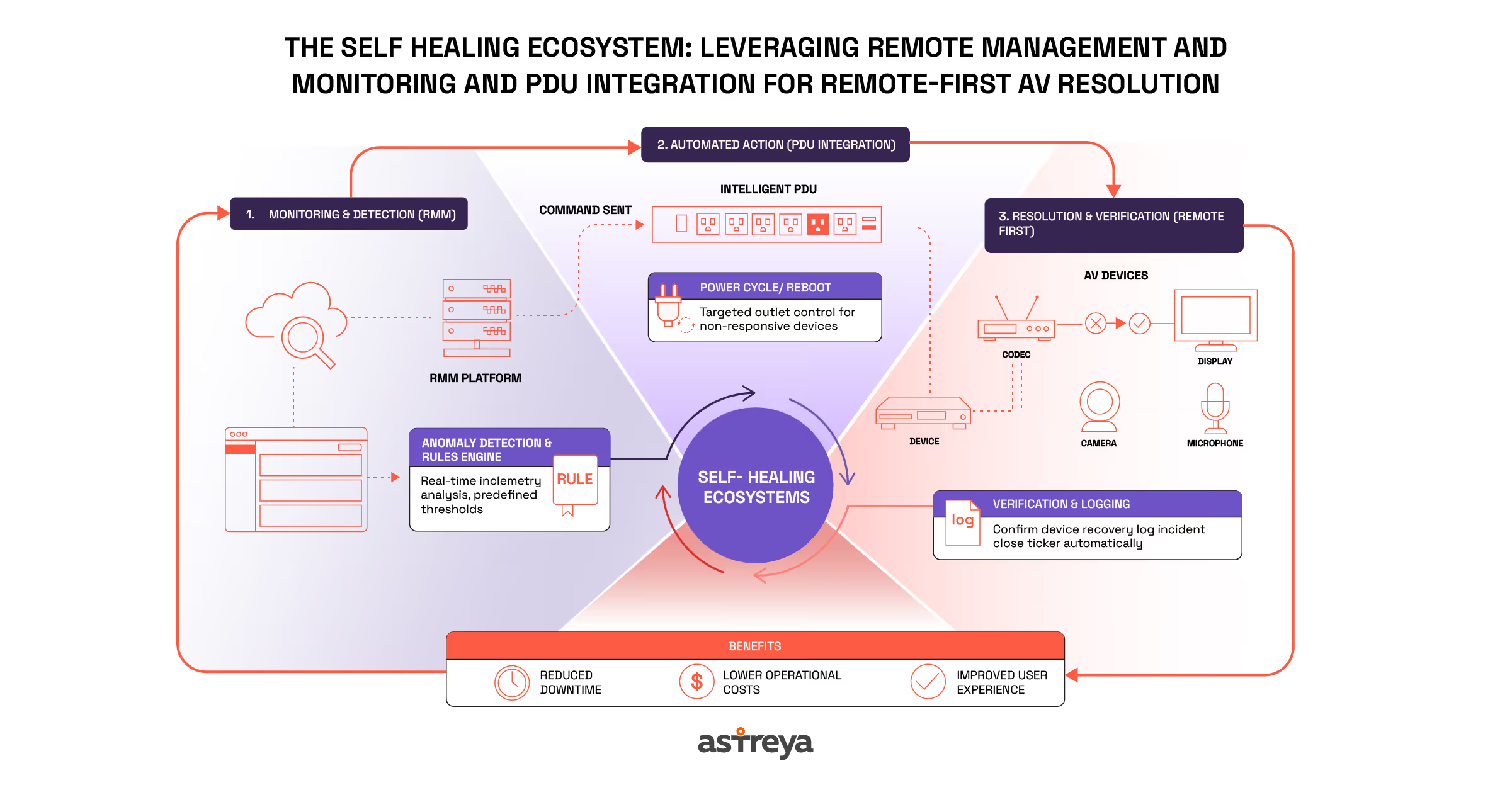
This process relies on two core components: the telemetry and diagnostic capabilities of a remote management and monitoring (RMM) platform, and the actionable control supplied by an intelligent PDU.
RMM: The foundation of self-healing AV
Self-healing requires visibility, and that begins with RMM platforms such as Utelogy. An effective RMM solution is like the central nervous system for a managed AV estate, continuously collecting AV device telemetry from every connected component. This data stream allows teams to detect issues early and understand their root causes without setting foot inside the room.
Key telemetry data includes:
- Device status: Online/offline status, network connectivity (IP address, latency)
- Health metrics: CPU utilization, internal temperature, fan speed
- API reporting: Specific application status, signal flow state, and error logs (e.g., "Display is powered on but reporting no signal")
- Usage data: Scheduling conflicts and usage patterns that can preemptively flag overloaded systems
This level of insight transforms support from guesswork into diagnosis. An RMM can flag that a codec is online but unresponsive, or that a switcher is reporting signal loss even though the display is powered on.
Intelligent PDUs: The action layer of self-healing AV
While RMM excels at detection and diagnosis, it can’t act on that information. This is where the intelligent PDU comes in.
An intelligent power distribution unit (PDU) is the physical action layer of self-healing AV. It gives administrators granular control over the electrical supply to individual AV devices, allowing them to translate the diagnostic insights from RMMs into solutions.
Each PDU outlet is individually addressable and remotely controllable. This enables two core remediation actions, power cycling and sequencing, as well as additional capabilities such as power metering and load shedding that support system health and monitoring.
- Remote power cycling (Reboot): The most common fix for AV failures. A technician (or automated script) can cycle power to a single device (e.g., the frozen video codec) without affecting others.
- Sequencing: Ensures components are powered on and off in the correct order, preventing damage and initializing systems reliably.
- Power metering & load shedding: Provides real-time and historical data on power consumption, allowing administrators to monitor device health (unusual power draw can indicate failure) and manage energy use.
When paired with RMM telemetry, these capabilities create a closed-loop AV remote management model capable of true self-healing.
How to automate AV self-healing
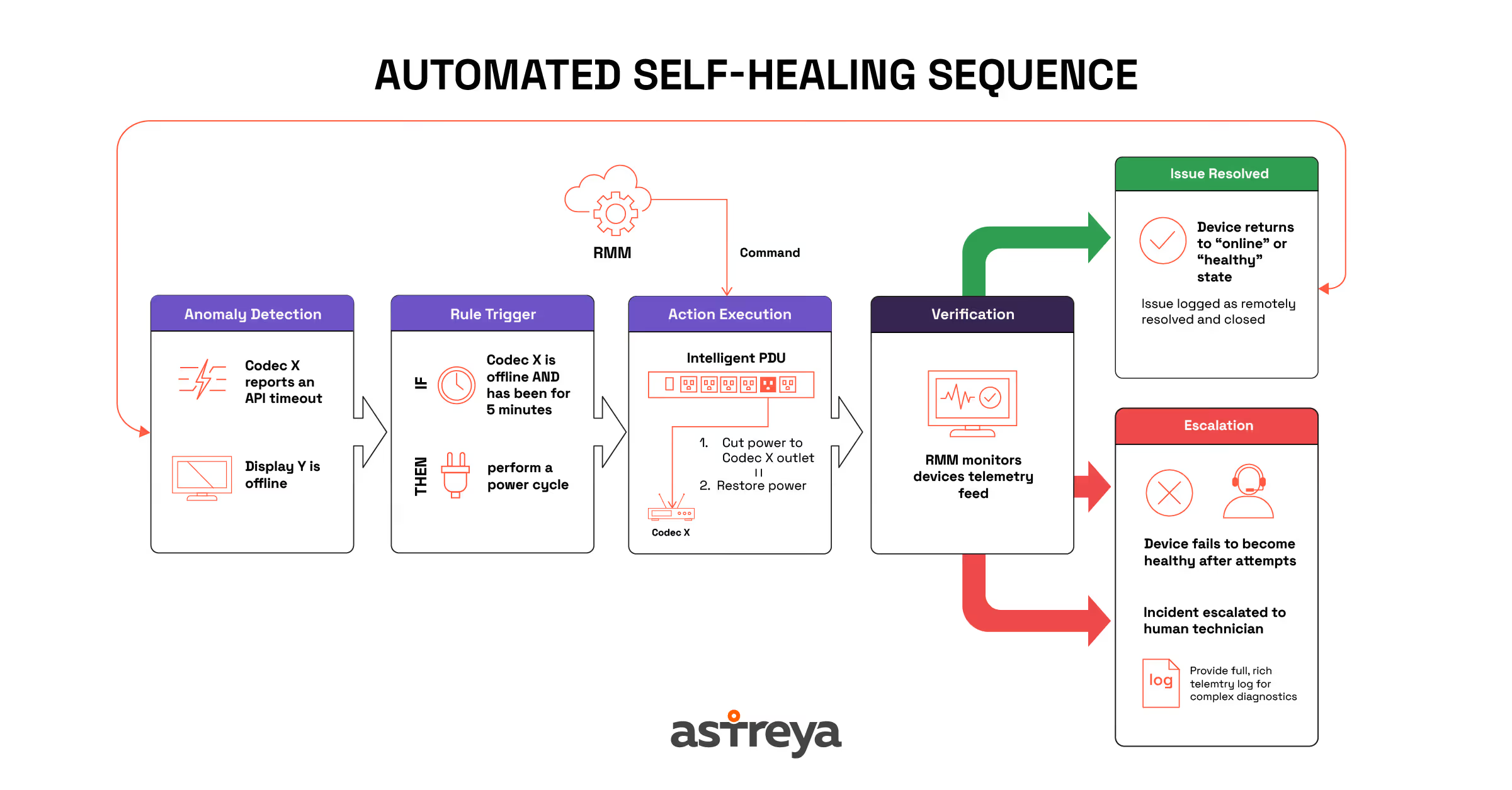
Once RMM and PDU capabilities are aligned, AV environments can automate the remediation sequence. The process follows a clear, repeatable pattern:
- Anomaly detection: The RMM receives telemetry (e.g., "Codec X reports an API timeout," or "Display Y is offline").
- Rule trigger: The RMM matches the anomaly against a pre-defined self-healing rule (e.g., IF Codec X is offline AND has been for 5 minutes, THEN perform a power cycle).
- Action execution: The RMM sends a command to the intelligent PDU to briefly cut power to the specific outlet connected to Codec X, then restore it (power cycle).
- Verification: The RMM monitors the device’s telemetry feed. If the device returns to an "online" or "healthy" state, the issue is logged as remotely resolved and closed.
- Escalation: If the issue persists after one or two attempts, it is escalated to a human technician, providing them with the full telemetry log for deeper diagnostics.
Remote-first operations: What changes for technicians
Self-healing automation eliminates most nuisance incidents, but it also transforms what happens when a human does need to step in. Instead of arriving blind or spending time reproducing an error, the technician receives a complete picture of what the system has already detected and attempted.
A remote-first workflow typically includes:
- The Telemetry Log: A full history of device status, network metrics, and the result of the attempted self-healing reboot.
- Diagnostic Action: The technician can immediately perform additional remote power cycles, reset configuration settings via the RMM, or adjust network parameters, all remotely.
- Targeted Onsite Dispatch: An in-room visit is only triggered when physical work (cable replacement, hardware swap, deep firmware recovery) is confirmed to be the only remaining option.
This shift means that the vast majority of resolutions occur from a central AV Operations Center, supporting more efficient, economical resolution, because onsite visits are reserved for the issues that truly require them.
Outcomes: The operational impact of self-healing AV
Combining RMM and PDU delivers measurable benefits:
Across large AV estates, these differences compound quickly: more rooms online, fewer escalations, a service model that scales without adding field technicians. The self-healing AV ecosystem, powered by RMM intelligence and PDU control, is no longer a luxury for any enterprise reliant on collaboration technology.
By automating the most common failure resolution steps (power cycling) and equipping technicians with a complete remote diagnostic toolset, enterprises can move from a reactive, break-fix cycle to a predictable, highly available operations model.
Ready to modernize your AV operations?
We can help you design, deploy, and manage a fully automated remote-first AV support model using RMM, PDUs, and end-to-end monitoring.
Let’s assess your current AV estate and identify where automation can immediately reduce cost and MTTR.
Contact Us